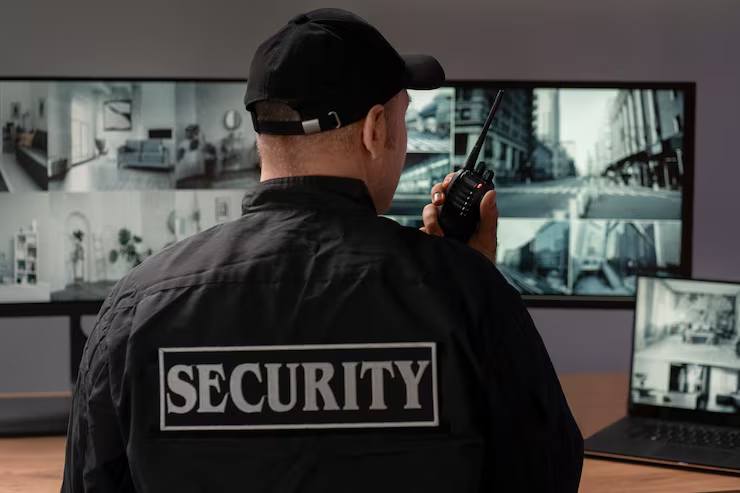
Threat Deterrence Protocols Used in Modern Armed Security Guard Services
There was a time when security was mostly reactive. A guard sat near the entrance, watched who came and went, and stepped in if something looked wrong. For a lot of businesses, apartment complexes, and event venues, that approach seemed good enough for years. The problem, obviously, is that once a situation has already escalated, the options for controlling it become much more limited. Modern security operations started shifting away from that mindset once clients realized deterrence usually works better than response alone.
That same thinking has influenced everything from corporate security planning to event security services. The goal is no longer simply having personnel present on-site. It is creating an environment where potential threats recognize very quickly that the property is actively monitored, professionally managed, and prepared to respond if necessary. Most incidents never begin in the first place when the visible security measures are strong enough to make someone reconsider their actions before they ever move forward.
The best armed security guard services tend to operate around layered deterrence rather than relying on a single tactic. Uniformed presence is part of it, obviously, but visibility alone is rarely the entire strategy. Patrol routes, access control procedures, communication systems, surveillance integration, and threat assessment protocols all work together behind the scenes. When those moving parts are coordinated properly, security starts feeling less like a reaction plan and more like a system designed to prevent problems from developing at all.
Visible Presence Changes Behavior More Than People Realize
One of the simplest deterrence tools still happens to be one of the most effective.
People behave differently when they know trained professionals are actively monitoring an area.
That applies to everything from retail theft and vandalism to unauthorized access attempts and workplace conflicts. Security personnel positioned near entrances, parking areas, loading zones, or reception points naturally increase accountability throughout a property. Most individuals looking for easy opportunities tend to move elsewhere once they recognize that those opportunities no longer exist.
Interestingly, visibility is not always about standing in one place either. Mobile patrols often create stronger deterrence because movement introduces unpredictability. Someone observing a property from the outside cannot easily determine where security personnel will be five or ten minutes later, which makes planning unwanted activity significantly more difficult.
Access Control Became Far More Sophisticated
A lot of security concerns begin long before an actual incident occurs. They start when unauthorized individuals gain access to areas where they should not be.
That is why access control became such a major part of modern threat deterrence protocols.
Visitor management systems, credential verification, restricted-entry zones, electronic gate controls, and scheduled access permissions all help reduce opportunities before they develop into larger problems. The process sounds straightforward on paper, but honestly, consistency matters more than complexity. Even the most advanced security technology loses effectiveness when procedures are applied inconsistently.
The strongest security operations usually combine technology with human oversight. Automated systems can flag unusual activity, but trained personnel are often the ones who recognize when something simply feels out of place.
Threat Assessment Starts Before A Threat Appears
One thing many people do not realize is that professional security teams spend a significant amount of time evaluating conditions that never become incidents.
That is actually part of the job.
Observation patterns, environmental understanding and risk assessment drive contemporary threat deterrence. They observe traffic, detect weak points of entry, analyze crowd activity and watch out for minor anomalies that could signify bigger issues in the future. Well-educated observers make all sorts of observations (almost never directly intervene by the definition of their role), and those are mostly true (which is exactly the point).
Many good deterrence protocols are, in fact, true background players.
The public will never know that a patrol route was altered, an access point secured, or a suspicious circumstance investigated and solved before it escalated to anything serious. In reality, the lack of visible incidents is often an indication that your security plan is actually working instead of an argument that it isn’t needed.
Communication Often Determines The Outcome
Security personnel rarely operate in isolation anymore.
Radio networks, dispatch centers, mobile reporting platforms, surveillance systems, and real-time communication tools allow teams to share information much faster than they could even a decade ago. That speed matters because situations evolve quickly once they begin.
A guard noticing unusual activity in one section of a property can immediately alert other personnel before the issue spreads elsewhere. The result is often a coordinated response that feels seamless to everyone involved.
Clients sometimes focus heavily on visible security measures, which makes sense. Those are the easiest things to notice. What they usually do not see are the communication protocols operating behind the scenes that allow multiple layers of security to function together effectively.
Technology Added New Layers To Deterrence
Security technology has expanded considerably over the last several years.
Surveillance cameras became smarter. Reporting systems became faster. Drone-assisted monitoring started providing visibility across larger properties where traditional patrol coverage alone might be difficult. Real-time dashboards allow clients to see activity reports and incident updates without waiting for end-of-day summaries.
None of those tools replaces trained personnel, though.
They tend to work best when supporting experienced security professionals rather than replacing them. Technology can provide information, but judgment, communication, and decision-making still come from people who understand how to interpret what they are seeing.
That balance is probably why modern deterrence strategies have become more effective overall. Human expertise and technology now support each other instead of operating as completely separate systems.
Threat deterrence rarely comes down to a single guard, a single camera, or a single policy. The strongest security programs usually combine visible presence, proactive patrols, controlled access, ongoing threat assessment, and reliable communication into one coordinated approach. Companies like Vigilant Eye Security have built their operations around that philosophy, providing armed and unarmed protection, mobile patrol services, fire watch coverage, executive protection, and technology-supported security solutions across California and Arizona. With leadership backgrounds rooted in military and law enforcement experience, the focus stays on preventing problems before they happen rather than simply reacting once they have already happened.
Featured Image Source: https://img.freepik.com/free-photo/portrait-male-security-guard-with-radio-station-camera-screens_23-2150368714.jpg?semt=ais_hybrid&w=740&q=80
