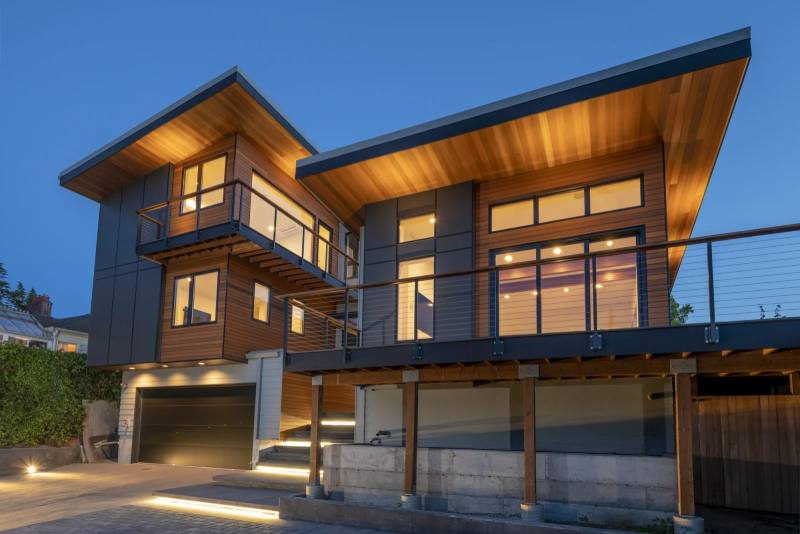
The Blueprint Lies: What A Luxury Home Builder Fixes Before You Ever See It
The drawing looks perfect. Clean lines, generous rooms, light pouring in from the right direction. You hold it and think, That is my house. It is not yet. A flat plan hides as much as it shows, and the gap between a pretty drawing and a livable home is where the best home builders earn their fee. A custom luxury home builder reads a blueprint and spots the problems you would only feel after moving in. Here is why the paper rarely tells the whole truth.
Think about what a blueprint actually is. Lines on a page, drawn to scale, frozen in two dimensions. It cannot show you how a hallway feels at seven in the morning. It will not warn you that the kitchen window faces a blank wall, or that the stairs land in an awkward spot. A custom luxury home builder catches those things on paper before they become regrets in drywall.
The Light The Drawing Cannot Show.
A plan shows where windows go. It does not show what comes through them.
Orientation changes everything about how a room feels. A south-facing wall of glass floods a space with warmth in winter and bakes it in summer. The drawing treats both windows the same. The best home builders do not. The United States Department of Energy points out that proper window placement and orientation can cut heating and cooling loads significantly through passive solar design.
Source: Passive Solar Home Design, U.S. Department of Energy, accessed 2024, energy.gov
So before a wall gets framed, a good builder asks where the sun tracks across your lot. Which rooms do you use at dawn? Which ones at dusk? The blueprint stays silent on all of it. Someone has to speak up.
Flow You Feel But Cannot Draw.
Here is the part that fools almost everyone. A floor plan looks roomy on paper and lives cramped in reality.
Why? Because the page flattens movement. You cannot see the daily walk from the garage to the kitchen with arms full of groceries. You cannot feel the pinch when two doors swing into the same three feet of space.
Let’s break it down. The things a builder corrects before you ever notice:
- Doorways that collide or open into walkways
- A pantry or laundry placed where you have to cross the whole house to reach it
- Ceilings that look fine in plan but feel low once you stand under them
- Sightlines that put the bathroom door in view of the dining table
- Outlets and switches drawn as afterthoughts, landing in useless spots
None of that jumps off the drawing. All of it shapes how the house feels for the next twenty years.
The Numbers Behind The Lines
A blueprint promises a structure. It does not prove the structure stands up cheaply.
Span lengths, beam sizes, load paths. The drawing assumes them. An experienced builder checks them against the real lot and the real budget. Sometimes a small change in the plan removes a costly steel beam. Sometimes it does the opposite, and you want to know that now, not at framing.
This is where the best home builders separate from the rest. They read a plan like a contractor and a banker at once. What does this line cost to build? Is there a simpler way to get the same room?
Change orders are the proof of what gets missed. The National Association of Home Builders has long reported that design changes and revisions rank among the leading sources of cost overruns on custom projects.
Source: Cost of Constructing a Home, National Association of Home Builders, accessed 2024, nahb.org
Catch the problem on paper, and it costs an eraser. Catch it during the build, and it costs a crew, a delay, and your patience.
Why This Saves You More Than Money
Picture the alternative. You skip this step. The plan goes straight to construction because it looked fine, and who reads blueprints that closely anyway?
Then you move in. The morning light is wrong. The kitchen feels tight. There is a switch behind the open door where no hand will ever find it. Small things, each one. Together, they nag at you every single day.
You cannot unbuild a house. That is the quiet fear under every custom project, and it is a fair one. The drawing felt safe because it was just paper. The mistakes feel permanent because they are.
A builder who works the plan hard, early, hands you something better than a flawless drawing. They hand you a house that works the way you actually live. Schenkar Construction builds from customizable plans you adjust before construction starts, which is exactly when these fixes cost almost nothing.
What To Ask Before A Single Wall Goes Up
You do not need to read blueprints fluently. You need a builder who reads them for you, out loud, in plain words.
Push on these before you approve any plan:
- Which way does the house face, and how does that change each room?
- Walk me through a normal day in this layout, door to door.
- Where will the change orders likely come from, and can we head them off now?
- What in this plan costs the most to build, and is it worth it?
- Can we adjust this before construction, or am I locked in?
A builder who answers those without flinching is reading the real house, not just the drawing. A builder who shrugs is handing you the blueprint’s lies and hoping you do not notice until the check clears.
Next Steps
The blueprint is a starting point, not a promise. The best home builders treat it that way, fixing on paper what would haunt you in plaster.
Schenkar Construction builds across Seattle, Bellevue, Kirkland, the Eastside, and waterfront communities throughout Washington, plus national and international projects. Bring your plan, or start one with the team. Either way, the time to catch the lies is before the concrete sets.
Featured Image Source: https://schenkarconstruction.com/wp-content/uploads/yootheme/cache/03/SEATTLE-CUSTOM–03d821ab.webp?src=wp-content/uploads/SEATTLE-CUSTOM-.jpeg&thumbnail=1600,1067,&type=webp,85&hash=dcaf6539
